Saturday, June 22, 2013

Craft, Pt. 11(b) - Submitting Without Drowning


I had meant to touch on the specifics of actually submitting in my previous post, but it all got away from me. With this one, I'd like to suss out a few of the particulars, which I had to do some research about early on. Hopefully this will help out a future submitter later.


Multiple Submissions Vs. Simultaneous Submissions

Typically defined, the term "multiple submissions" means several unique submissions to the same journal, review, or publication place at the same time. During the course of my exploration, I've found a small number of places that accept multiple submissions. I imagine this is due to the fact that some writers simply can't help themselves and want to send a deluge of content to a place and see which they like. The problem with this is that it creates a mountain of submissions for editors to sift through. Especially considering how the next phrase works.

"Simultaneous submissions" is a term that means a single piece can be submitted to multiple places at the same time. More publications are open to this as long as they're notified when the piece is published elsewhere so that they can remove it from their own consideration pile. You can see now how the confluence of both multiple and simultaneous submissions can be problematic; submitting the same ten pieces to ten different places might up your odds of something being published, but it overwhelms and gums up the works all across the board. To say nothing of the fact that you'd have to go back and contact each of those publications if one story got published, much less all ten, a very small likelihood in and of itself.


Submitting Novel Excerpts

This one's tricky. Some places accept novel excerpts, but most don't. Why, you might ask? Because there are very few chapters of most books that don't require the chapters before and after it to make sense of the one in question. Even better, remove a chapter from your book. How does the removal of that chapter change the narrative flow of the entire work itself? If the change is so drastic as to make your book unreadable, then obviously you can't submit that piece for standalone publication. A general rule of thumb for my own personal use: don't submit novel excerpts, even if a publication accepts them on principle. It's highly unlikely the piece will make much sense without the corresponding chapters and if you're a writer, then you know you've got other pieces to submit.


Submitting Near/Around Due Dates

The vast majority of publications have cutoff dates for when they stop reading and considering submissions. I don't have much in the way of knowing how much more quickly a publication will make a decision on a piece the closer it's submitted to the due date. Personally, I try to submit a week or two before the due date, hoping I will end up hearing back on the piece sooner. But, it's just as likely that you'll hear back quickly if you submit early on when there's not such a wave of submissions coming in all at once. Perhaps the middle ground of submitting at the halfway point between the open submission date and the closed submission date is your best bet here.


Contacting a Publication on the Status of a Submission

So your piece has been out in submission land for five months. You've heard nothing back from the editors and you worry that they've somehow forgotten about your piece (because your piece being published is the most important thing...to you). Wait another month. Most publications that I've come across have blatantly stated "do not contact us about the status of a submission unless it's been over (x) number of months." Six months is usually the accepted length of time. Anytime before that and you may find yourself either blacklisted from that particular publication or have your submission summarily rejected. These are obviously worst-case scenarios, but it can happen. Don't be a douche; stay patient.


Paying to Submit

I used to only submit to places that were free and didn't charge a dime for anything; not for reading, not for editing, nothing. Now that most publications have gone to digital submissions, a few have begun charging reading fees. At first this bothered me, but more and more I realized how much paper these places were probably using to print up who knows how many submissions, so their costs were probably ballooning a bit. Since the writer wasn't submitting hard copies via post, this meant more costs in printer ink and paper. And a lot of places only publish digitally now, trying to keep their costs down while still trying to find that writer/writing that they want to highlight in their publication.

Most places charge just a two or three dollar fee to submit. This is completely reasonable. There are a few others I've seen that have charged upwards of $30, but this fee includes a deep critique of the submitted piece mailed back to the writer with notes on the manuscript. I won't say that's a high fee, but if you're just starting out and haven't had anyone look at your work before, try one of these once or twice to get a feel for the process. Each editor will read a piece differently, so it's good to get an in-depth look at your work whenever possible. Bottom line: fees are okay. Don't be afraid to pay them on occasion, but there are certainly plenty of other (free) places out there.

(29,210)

Thursday, June 20, 2013

Craft, Pt. 11 - Submitting Without Drowning


"How you uh, how you coming on that novel you're working on? Huh? Gotta a big, uh, big stack of papers there? Gotta, gotta nice little story you're working on there? Your big novel you've been working on for 3 years? Huh?"


So yeah. You've put in the work. You've got a stack of stories you want the world to read because the world HAS to read these stories. Immediately. Now what?

I won't begin to tell you there's a single right way to do any of this; I think history shows us over and over again that everyone forges their own path to success and there's no better way to write a story than the way you write it. There's also no better way to try to get published and taken seriously unless it's on your terms. Having said that, I'll just go over my own process for the last year and a half. Don't take it as gospel, but feel free to use it as a trail map until you've found your own way.

When I realized I had several stories I could start sending out to various publishers, I googled these phrases to start off with:

- Literary Journal
- Journal
- Literary Review
- Review
- Fiction Submissions

You get a pretty good long list of places accepting work from both new and established authors. But one shouldn't simply barrage vast numbers of magazines in the hopes that something will stick. Like readers, each magazine has its own personal aesthetic and most implore you to read previous issues so that you don't waste your time submitting or waste their time reading that sci-fi/western piece you submitted to a place that deals primarily in turn-of-the-century, coming-of-age stories written in transcendentalist styles. But it's not always feasible to read a single copy of every literary journal out there just to find out whether or not they'll like your stuff.

What I found while picking up new story collections by authors I'd never heard of before was that each author typically had published some of their stories elsewhere separately first. As rational an approach as this was, it had never occurred to me to approach publishing this way. Short story collections that I found myself drawn to were typically of the weirder, more surreal, more slipstream/experimental and there was a pattern to where many of the authors had submitted their works to. Since I feel I write in this same vein, I began checking these sites and magazines specifically. I began submitting, feeling pretty firmly that I wasn't wasting my time or the publisher's time by doing so. What I soon realized was that I needed to have a system in place.

A great tool is Submittable (formerly Submishmash). If you don't already have an account here, you should get one as it's become almost the industry standard when it comes to writing submissions. Not only does it track the pieces that have been accepted, but tracks the ones that are currently being read, the ones that have been declined, so on. It's a really incredible resource that's helped me immensely. But supposing you don't currently have an account there? What would you do?


Almost like making copies in triplicate, I devised a few processes that help keep me from submitting pieces either to the same place twice or two pieces to the same place at the same time. The first is via my external hard-drive where I keep my files. Since every journal or magazine may have different requirements for submitting (pagination, contact information placement, etc.), each submission is a separate file. The letter (z) denotes pieces that are currently being considered, the letter (W) means pieces I've had to withdraw because they'd been accepted at other magazines, the letter (D) means the piece was denied or rejected, and the letters (AAA) means the piece was accepted. Not only is everything alphabetized, but each submission is dated as well so that I don't submit more times than is necessary during reading periods.


So that's two ways I've got my submissions info backed up, which is good because not every journal or magazine utilizes Submittable. Some prefer by mail, email,  or their own submission managers particular to their site. Either way, now I've got every submission (denied, accepted, withdrawn) completely accounted for in this file. A quick scan can show me all the places I've submitted to and which pieces have been denied where. But I needed to be more thorough, more ADD about the process.

I keep an online journal and began utilizing it to keep track of links to submission sites, all their pertinent information (dates due, page requirements, whether or not they allowed simultaneous submissions, etc.), and even as another way of simply showing which pieces were in which stage of review for publication.


And though it's a pain in the ass to keep updating, it's proven to be a wildly excellent system for me. The list of publications and the information I require grows every day and I keep adding publication opportunities to each story single story entry. When I submit to one place, I remove that particular link from that story's entry so I never end up resubmitting the same piece to a magazine twice. No one wants to be remembered as that guy that just couldn't take a hint after his first rejection letter.


There are PLENTY of places out there for every taste and genre of writer, so don't get too discouraged. And if you find yourself discouraged or waiting with bated breath to hear back about the status of a submission...stop. Go back to writing, go back to finishing half-cooked projects so that you can continue submitting to other places. By the time you've forgotten to check their statuses, they'll have already gotten back to you and you'll have already created new pieces to submit.

I genuinely hope this helps, even a little bit. Granted this is just my own laborious process, but it's been working thus far.

(29,170)

Monday, June 10, 2013

Books On Deck / Up Next

 Ben Spivey - "Black God"

"Ben Spivey's BLACK GOD is a surreal dreamscape of a book. To borrow from the book itself, 'There's something black in that place like it was untouched by God himself.... Or herself.' At its claustrophobic core, this book is a love story about time and memory, fear and death. At its dreamlike fringes, it is a book that might have been written by the son of Kafka and Braque. Like our best books, it is a love story in love with its own death."—Peter Markus

"In BLACK GOD there is a dream architecture that draws the aging narrator Cooper from his dying wife like a moth to its hard and gateless outer shell. With him we explore the received forms of daily life mingling with fluctuating dreams of the interior of eternity. Here, Spivey accomplishes the rare feat of investing Cooper's efforts with resonance though his motives obscure even to himself and the theater in which he operates is a dreamscape of mechanical islands, a wife retreating into silhouettes, and beaches of washed up clocks: 'I looked up and could see where I fell from—a house hanging in the sky like a new moon—the actual moon cast shadow on the home giving it celestial shape. I could even see the stairs I must have tumbled from hanging there like a limp wrist.' This is a visionary book, a genuine terror and awe."—Joe Hall


 Jeremy Scahill - "Dirty Wars: The World is a Battlefield" 

"In Dirty Wars, Jeremy Scahill, author of the New York Times best-seller Blackwater, takes us inside America’s new covert wars. The foot soldiers in these battles operate globally and inside the United States with orders from the White House to do whatever is necessary to hunt down, capture or kill individuals designated by the president as enemies.

Drawn from the ranks of the Navy SEALs, Delta Force, former Blackwater and other private security contractors, the CIA’s Special Activities Division and the Joint Special Operations Command (JSOC), these elite soldiers operate worldwide, with thousands of secret commandos working in more than one hundred countries. Funded through “black budgets,” Special Operations Forces conduct missions in denied areas, engage in targeted killings, snatch and grab individuals and direct drone, AC-130 and cruise missile strikes. While the Bush administration deployed these ghost militias, President Barack Obama has expanded their operations and given them new scope and legitimacy.

Dirty Wars follows the consequences of the declaration that “the world is a battlefield,” as Scahill uncovers the most important foreign policy story of our time. From Afghanistan to Yemen, Somalia and beyond, Scahill reports from the frontlines in this high-stakes investigation and explores the depths of America’s global killing machine. He goes beneath the surface of these covert wars, conducted in the shadows, outside the range of the press, without effective congressional oversight or public debate. And, based on unprecedented access, Scahill tells the chilling story of an American citizen marked for assassination by his own government.

As US leaders draw the country deeper into conflicts across the globe, setting the world stage for enormous destabilization and blowback, Americans are not only at greater risk—we are changing as a nation. Scahill unmasks the shadow warriors who prosecute these secret wars and puts a human face on the casualties of unaccountable violence that is now official policy: victims of night raids, secret prisons, cruise missile attacks and drone strikes, and whole classes of people branded as “suspected militants.” Through his brave reporting, Scahill exposes the true nature of the dirty wars the United States government struggles to keep hidden."


 George Packer - "The Unwinding: An Inner History of the New America" 

"American democracy is beset by a sense of crisis. Seismic shifts during a single generation have created a country of winners and losers, allowing unprecedented freedom while rending the social contract, driving the political system to the verge of breakdown, and setting citizens adrift to find new paths forward. In The Unwinding, George Packer, author of The Assassins’ Gate: America in Iraq, tells the story of the United States over the past three decades in an utterly original way, with his characteristically sharp eye for detail and gift for weaving together complex narratives.

The Unwinding journeys through the lives of several Americans, including Dean Price, the son of tobacco farmers, who becomes an evangelist for a new economy in the rural South; Tammy Thomas, a factory worker in the Rust Belt trying to survive the collapse of her city; Jeff Connaughton, a Washington insider oscillating between political idealism and the lure of organized money; and Peter Thiel, a Silicon Valley billionaire who questions the Internet’s significance and arrives at a radical vision of the future. Packer interweaves these intimate stories with biographical sketches of the era’s leading public figures, from Newt Gingrich to Jay-Z, and collages made from newspaper headlines, advertising slogans, and song lyrics that capture the flow of events and their undercurrents.

The Unwinding portrays a superpower in danger of coming apart at the seams, its elites no longer elite, its institutions no longer working, its ordinary people left to improvise their own schemes for success and salvation. Packer’s novelistic and kaleidoscopic history of the new America is his most ambitious work to date."


 Richard N. Haass - "Foreign Policy Begins at Home: The Case for Putting America's House in Order"


"The biggest threat to the United States comes not from abroad but from within. This is the provocative, timely, and unexpected message of Council on Foreign Relations President Richard N. Haass’s Foreign Policy Begins at Home.

A rising China, climate change, terrorism, a nuclear Iran, a turbulent Middle East, and a reckless North Korea all present serious challenges. But U.S. national security depends even more on the United States addressing its burgeoning deficit and debt, crumbling infrastructure, second class schools, and outdated immigration system.

Foreign Policy Begins at Home describes a twenty-first century in which power is widely diffused. Globalization, revolutionary technologies, and the rise and decline of new and old powers have created a “nonpolar” world of American primacy but not domination. So far, it has been a relatively forgiving world, with no great rival threatening America directly. How long this strategic respite lasts, according to Haass, will depend largely on whether the United States puts its own house in order.

Haass argues for a new American foreign policy: Restoration. At home, the new doctrine would have the country concentrate on restoring the economic foundations of American power. Overseas, the U.S. would stop trying to remake the Middle East with military force, instead emphasizing maintaining the balance of power in Asia, promoting economic integration and energy self-sufficiency in North America, and working to promote collective responses to global challenges.

Haass rejects both isolationism and the notion of American decline. But he argues the United States is underperforming at home and overreaching abroad. Foreign Policy Begins at Home lays out a compelling vision for restoring America’s power, influence, and ability to lead the world."


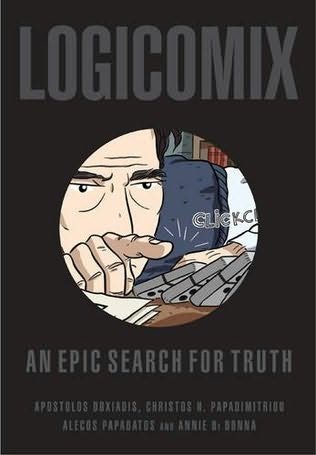
 Doxiadis, Papadimitrius, Papadatos, Donna - "Logicomix" 

"This exceptional graphic novel recounts the spiritual odyssey of philosopher Bertrand Russell. In his agonized search for absolute truth, Russell crosses paths with legendary thinkers like Gottlob Frege, David Hilbert, and Kurt Gödel, and finds a passionate student in the great Ludwig Wittgenstein. But his most ambitious goal—to establish unshakable logical foundations of mathematics—continues to loom before him. Through love and hate, peace and war, Russell persists in the dogged mission that threatens to claim both his career and his personal happiness, finally driving him to the brink of insanity.

This story is at the same time a historical novel and an accessible explication of some of the biggest ideas of mathematics and modern philosophy. With rich characterizations and expressive, atmospheric artwork, the book spins the pursuit of these ideas into a highly satisfying tale.

Probing and ingeniously layered, the book throws light on Russell’s inner struggles while setting them in the context of the timeless questions he spent his life trying to answer. At its heart, Logicomix is a story about the conflict between an ideal rationality and the unchanging, flawed fabric of reality."


 Ben Marcus - "Leaving the Sea"
(Out in Jan. 2014) 

"In the dystopian "Rollingwood," a divorced father struggles to hold on to his job while taking care of his ill infant son. In the hilarious "I Can Say Many Nice Things," a writer toying with infidelity teaches a brutal creative writing workshop on a cruise ship. In "Watching Mysteries with My Mother," a man spends time with his aging mother and meditates on mortality. And in the title story, told in a single breathless sentence, we watch as the narrator's marriage and his sanity unravel.

Surreal and tender, terrifying and life-affirming, Leaving the Sea brings us an utterly unique writer at the height of his powers."


Sandra Day O'Connor - "Out of Order: Stories from the History of the Supreme Court" 

"From Justice Sandra Day O’Connor, the first woman to sit on the United States Supreme Court, comes this fascinating book about the history and evolution of the highest court in the land.

Out of Order sheds light on the centuries of change and upheaval that transformed the Supreme Court from its uncertain beginnings into the remarkable institution that thrives and endures today. From the early days of circuit-riding, when justices who also served as trial judges traveled thousands of miles per year on horseback to hear cases, to the changes in civil rights ushered in by Earl Warren and Thurgood Marshall; from foundational decisions such as Marbury vs. Madison to modern-day cases such as Hamdi vs. Rumsfeld, Justice O’Connor weaves together stories and lessons from the history of the Court, charting turning points and pivotal moments that have helped define our nation’s progress.

With unparalleled insight and her unique perspective as a history-making figure, Justice O’Connor takes us on a personal exploration, painting vivid pictures of Justices in history, including Oliver Wendell Holmes Jr., one of the greatest jurists of all time; Thurgood Marshall, whose understated and succinct style would come to transform oral argument; William O. Douglas, called “The Lone Ranger” because of his impassioned and frequent dissents; and John Roberts, whom Justice O’Connor considers to be the finest practitioner of oral argument she has ever witnessed in Court. We get a rare glimpse into the Supreme Court’s inner workings: how cases are chosen for hearing; the personal relationships that exist among the Justices; and the customs and traditions, both public and private, that bind one generation of jurists to the next—from the seating arrangements at Court lunches to the fiercely competitive basketball games played in the Court Building’s top-floor gymnasium, the so-called “highest court in the land.”

Wise, candid, and assured, Out of Order is a rich offering of inspiring stories of one of our country’s most important institutions, from one of our country’s most respected pioneers."


(28,957)

Wednesday, May 29, 2013

(Review) Matt Bell's "How They Were Found"


"How They Were Found" 
by Matt Bell
238pgs
Keyhole Press Books

I've been on a kick recently, trying to find short story collections by little-known authors or those better known on the far outskirts of the literary canon, people pushing beyond just pure narrative and reconfiguring text to suit their own needs. Matt Bell's "How They Were Found" sounded like something I would enjoy immensely, if only for the imagination if not for the writing. As far as I'm concerned, he delivered on all counts.

The majority of the collection (13 stories total) are longer pieces than I'm typically used to reading, but each piece was as engaging, if not more so, than the one that preceded it, which was a nice surprise. Often a collection can lose steam towards the final push if the pieces aren't placed properly, and while I was less enthused by two or three of the stories, the remaining ones made me an instant fan and I will certainly be checking out more of his work.

"The Cartographer's Girl" was a wonderful introduction, utilizing map notations and symbols in an effort to deconstruct a past relationship, of which there is still some mystery left lingering in the air.

"X:
X is the store where he bought the ring he never got to give her.
X is the place where he planned to propose, where he already made the reservation.
X is the speech he rehearsed, that he practiced saying slowly, carefully, so that she would not mishear even a single syllable.
X is nowhere, X is now, X is never mind.
X is everything that ever mattered. 
X is all he has left."


"The Receiving Tower" seemed to be after some great "event," putting us in a snowy region with a small battalion of soldiers who were slowly losing their minds and their memories, forgetting not only their names, but their entire histories and how they ended up where they are.

"As I remember it - which is not well - young Kerr was the first to grow dim. We'd find him high in the tower's listening room, cursing at the computers, locking up console after console by failing to enter his password correctly. At night, he wandered the barracks, holding a framed portrait of his son and daughter, asking us if we knew their names, if we remembered how old they were. This is when one of us would remove the photograph from its frame so that he could read the fading scrawl on the back, the inked lines he eventually wore off by tracing them over and over and over with this fingers, after which there was no proof to quiet his queries."


"His Last Great Gift" was an unbelievably dark piece about 19th-Century minister building a machine that would be the supposed coming of God. More than just a commentary on religion through science fiction tropes, Bell does a great job of explicating the relationships between the members of this religious sect as their lives come into constant contact with each other.

"He says, When God created the world, did he try over and over and over again until he got it right? Are there castaway worlds littering the cosmos, retarded with fire and ice and failed life thrashing away in the clay? 

No, there are not.

When God came to save this world, did he impregnate all of Galilee, hoping that one of those seeds would grow up to be a Messiah?

No. What god needs, God makes, and it only takes the once."


But it is "Dredge" that curled my toes back the most out of this entire collection. We follow along with the narrator as he first finds a body in a lake, removes the body, and takes it home with him, taking off on some kind of twisted detective noir tale in suburbia. Truly one of the creepiest things I've read and I appreciated the deep psychological explication of the character as things move along. While a "normal" person may not agree with every action that occurs, there's an understanding that comes by the final page that's disturbingly sweet.


There are several other solid stories here ("An Index of How Our Family Was Killed" was a particularly inspired piece), but these were the ones that really stood out to me. The entire collection as a whole is really solid and even the longer pieces didn't make me feel like I was trudging through them; I was genuinely enjoying them. "How They Were Found" is highly unsettling and highly enjoyable. I'd scoop up everything of his that you can find.


(28,624)

Saturday, May 25, 2013

Books on Deck / Up Next

I've been slow on posting new stuff, but I've been reading through a fantastic "trilogy" by Carlos Ruiz Zafon recently. Beginning with "The Shadow of the Wind," then "The Angel's Game," and ending on "The Prisoner of Heaven." All pretty good books, but the last of the series was half the size of the first two and felt rushed (probably more by Zafon's publishers than the man himself). Regardless, all three were fantastic reads.

I've also been trying to pump out more stories for this collection I've been working on for the last year and a half now, so I've been trying to find new (to me) short story collections in a darker, more experimental vein. I've got a few coming to me in the mail that I'm super excited about. The first one to arrive, Matt Bell's "How They Were Found" has been an incredibly nice surprise thus far. Right up my damn alley and I couldn't be happier with his style, his imagination, or with his prose.

Matt Bell - "How They Were Found"

"In his debut collection “How They Were Found,” Matt Bell draws from a wide range of genres to create stories that are both formally innovative and imaginatively rich. In one, a 19th-century minister follows ghostly instructions to build a mechanical messiah. In another, a tyrannical army commander watches his apocalyptic command slip away as the memories of his men begin to fade and fail. Elsewhere, murders are indexed, new worlds are mapped, fairy tales are fractured and retold and then fractured again. Throughout these thirteen stories, Bell’s careful prose burrows at the foundations of his characters’ lives until they topple over, then painstakingly pores over the wreckage for what rubbled humanity might yet remain to be found."


Amber Sparks - "May We Shed These Human Bodies"


“May We Shed These Human Bodies” peers through vast spaces and skies with the world's most powerful telescope to find humanity: wild and bright and hard as diamonds. Here is humanity building: families reconstruct themselves, mothers fashion babies from two-by-fours and nails, boys make a mother out of leaves and twigs and wishing. Here is humanity tearing down: a wife sets her house on fire in revenge, a young girl plots to kill the ghosts that stalk her, a dying man takes the whole human race with him. Here is humanity transforming: feral children, cannibalistic seniors, animal wives - a whole sideshow's worth of oddballs and freaks."


Donald Barthelme - "Paradise"


"Simon, a middle-aged architect separated from his wife, is given the chance to live out a stereotypical male fantasy: freed from the travails of married life, he ends up living with three nubile lingerie models who use him as a sexual object. 

Set in the 1980s, there's a further tension between Simon's desire to exploit this stereotypical fantasy and his (as well as the author's) desire to treat the women as human beings, despite the women's claims that Simon can't distinguish between their personalities. 

Employing a variety of forms, Barthelme gracefully plays with this setup, creating a story that's not just funny—although it's definitely that—but actually quite melancholy, as Simon knows that the women's departure is inevitable, that this "paradise" will come to an end, and that he'll be left with only an empty house, booze, and regrets about chances not taken."


David Markson - "Vanishing Point"


"In the literary world, there is little that can match the excitement of opening a new book by David Markson. From "Wittgenstein’s Mistress" to "Reader’s Block" to "Springer’s Progress" to "This Is Not a Novel," he has delighted and amazed readers for decades. And now comes his latest masterwork, "Vanishing Point," wherein an elderly writer (identified only as "Author") sets out to transform shoeboxes crammed with notecards into a novel — and in so doing will dazzle us with an astonishing parade of revelations about the trials and calamities and absurdities and often even tragedies of the creative life — all the while trying his best (he says) to keep himself out of the tale. Naturally he will fail to do the latter, frequently managing to stand aside and yet remaining undeniably central throughout — until he is swept inevitably into the narrative’s startling and shattering climax. A novel of death and laughter both — and of extraordinary intellectual richness."


Ann & Jeff Vandermeer - "The Thackery T. Lambshead Cabinet of Curiosities"


"You’ll be astonished by what you’ll find in “The Thackery T. Lambshead Cabinet of Curiosities.” Editors Ann and Jeff Vandermeer have gathered together a spectacular array of exhibits, oddities, images, and stories by some of the most renowned and bestselling writers and artists in speculative and graphic fiction, including Ted Chiang, Mike Mignola (creator of “Hellboy”), China Miéville, and Michael Moorcock. A spectacularly illustrated anthology of Victorian steampunk devices and the stories behind them, The “Thackery T. Lambshead Cabinet of Curiosities” is a boldly original, enthrallingly imaginative, and endlessly entertaining entry into a hidden world of weird science and unnatural nature that will appeal equally to fantasy lovers and graphic novel aficionados."


Dante Alighieri - "The Divine Comedy" (John Ciardi Translation)


"The historical and cultural significance of Dante Alighieri’s masterpiece “The Divine Comedy” cannot be overstated. Dante’s poetry takes the reader on a multi-layered journey, one through which he or she experiences this literary master s unique aesthetic and spiritual sensibilities. “The Divine Comedy” also presents the opportunity to gain a deeper understanding of medieval Italian thought and its bearing on Western theology and culture. This lyrical allegory of a journey from the depths of Hell to Paradise is a moving read in its own right and its influence upon world literature unchallenged."


(28,482)

Tuesday, April 16, 2013

Books On Deck / Up Next

Stephen Beachy - "Some Phantom / No Time Flat" (Two Novellas) 

"In Some Phantom an unnamed woman arrives in a strange city, fleeing a violent relationship in her past. Taking a job with disturbed children, her own mental stability becomes more and more precarious. A marriage of The Turn of the Screw and Herk Harvey's Carnival of Souls, Some Phantom poses questions about the line between madness and memory, fantasy and abuse, questions elaborated on in No Time Flat. No Time Flat follows Wade, a young boy who grows up on the American plains in an isolated existence with his elderly parents, as he makes his way through a childhood of playground shootings and mysterious strangers. Becoming a wanderer himself, Wade inhabits a sparse American landscape of fleeting connections, missing children, and possible crimes."


Alvin Lu - "The Hell Screens" 

"Cheng-Ming, a Chinese American, rummages through the used-book stalls and market bins of Taipei. His object is no ordinary one - he's searching obsessively for accounts of ghosts and spirits, suicides and murders in a city plagued by a rapist-killer and less tangible forces. Cheng-Ming is an outsider trying to unmask both the fugitive criminal and the otherworld of spiritual forces that are inexorably taking control of the city. Things get complicated when the fetid island atmosphere begins to melt his contact lenses and his worsening sight paradoxically opens up the teeming world of ghosts and chimeras that surround him. Vengeful and anonymous spirits commandeer Cheng-Ming's sight, so that he cannot distinguish past from present, himself from another. Images from modern and colonial Taiwan - an island of restless spirits - assail Cheng-Ming even as they captivate the reader."


Bernard M. Patten - "The Logic of Alice: Clear Thinking in Wonderland"

"In this unique approach to interpreting Alice, the fruit of ten years of research, Dr. Bernard M. Patten shows that Charles Lutwidge Dodgson, aka Lewis Carroll, fused his passion for logic, mathematics, and games with his love of words and nonsense stories to produce a multifaceted, intricately structured work of literature. Patten provides a chapter-by-chapter skeleton key to Alice, which meticulously demonstrates how its various episodes reveal Dodgson's profound knowledge of the rules of clear thinking, informal and formal logic, symbolic logic, and human nature."


Peter Hook - "Unknown Pleasures: Inside Joy Division"

"In Unknown Pleasures: Inside Joy Division, Peter Hook, bassist for the legendary, groundbreaking band Joy Division, takes readers backstage with the group that helped define the sound of a generation and influenced artists such as U2, Radiohead, and the Red Hot Chili Peppers.

Unlike other books about Joy Division, Factory Records, or lead singer Ian Curtis—who took his own life just before the band's first U.S. Tour—Unknown Pleasures tells Joy Division's story from the unique perspective of one of the three surviving band members."


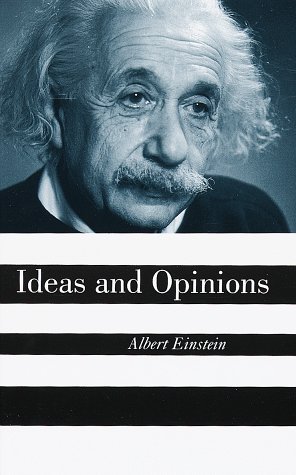
Albert Einstein - "Ideas and Opinions"

"A new edition of the most definitive collection of Albert Einstein's popular writings, gathered under the supervision of Einstein himself. The selections range from his earliest days as a theoretical physicist to his death in 1955; from such subjects as relativity, nuclear war or peace, and religion and science, to human rights, economics, and government."


Neil DeGrasse Tyson - "Death by Black Hole and Other Cosmic Quandaries" 


"Loyal readers of the monthly "Universe" essays in Natural History magazine have long recognized Neil deGrasse Tyson's talent for guiding them through the mysteries of the cosmos with stunning clarity and almost childlike enthusiasm. Here, Tyson compiles his favorite essays across a myriad of cosmic topics. The title essay introduces readers to the physics of black holes by explaining the gory details of what would happen to your body if you fell into one. "Holy Wars" examines the needless friction between science and religion in the context of historical conflicts. "The Search for Life in the Universe" explores astral life from the frontiers of astrobiology. And "Hollywood Nights" assails the movie industry's feeble efforts to get its night skies right."


Joshua Mohr - "Fight Song" 

"When his bicycle is intentionally run off the road by a neighbor's SUV, something snaps in Bob Coffin. Modern suburban life has been getting him down and this is the last straw. To avoid following in his own father’s missteps, Bob is suddenly desperate to reconnect with his wife and his distant, distracted children. And he's looking for any guidance he can get.

Bob Coffin soon learns that the wisest words come from the most unexpected places, from characters that are always more than what they appear to be: a magician/marriage counselor, a fast-food drive-thru attendant/phone-sex operator, and a janitor/guitarist of a French KISS cover band. Can these disparate voices inspire Bob to fight for his family? To fight for his place in the world?

A call-to-arms for those who have ever felt beaten down by life, Fight Song is a quest for happiness in a world in which we are increasingly losing control. It is the exciting new novel by one of the most surprising and original writers of his generation."


Norman Lock - "A History of the Imagination"

"A History of the Imagination is a postmodern tale of adventure that reshapes the parameters of time and space, thought and action. In a metaphorical Africa, replete with nostalgia (but no dimensions), anything can happen and usually does. The narrator defends his magical departures, saying his is a history of possibilities, where fiction is "no less real for [it's] being so." But when Darwin's corpse begins to lust after Colette and the African porters go on strike because the author hasn't acknowledged the important role they play, we are left to wonder: just how far is reality from dreams?

Norman Lock juxtaposes remote times and places, historical facts and literary fictions, to create an absurdist collage reminiscent of Guy Davenport and Donald Barthelme. In this world it is not impossible to sail from Mombasa to Cinncinati, or to set out from the City of Radiant Objects, where "things are free of the obligation to signify," or to go hunting icebergs in a quest to avenge the Titanic at last. Borne aloft by Wilbur Wright, Jules Verne, Ziegfield, and Houdini, we find ourselves lost again in a "seam in the world...between History and Imagination."


(27,570)

Monday, April 15, 2013

Craft, Pt. 10 - Just Say No to "Write What You Know"


This has to be one of the worst maxims perpetuated by writing teachers and other writers ever. It ranks just above "kill your darlings" for me, but only because I understand (and agree with - sometimes) the idea of deleting characters or lines that may resonate with the writer but not with the writing. Why we still utilize these phrases as a kind of regimented approach to writing is bothersome. But perhaps that's the nature of the writer learning in an academic environment. While I don't think there is ever one and only one "true" way to write, I understand the need to at least condense the basic ideas of writing into an easily accessible patois that every new writer should pick up and hold on to for awhile before discarding completely.

"Write what you know" was a terrible barrier I had to scale in order to find my own voice within my writing. For years I tried to tell stories that contained elements of my own personal knowledge...and they were awful. I was simply saying the same things I'd read about in other books; same themes, same basic happenings, same feeling of "blah, who cares?" When I reached grad school, I became steadfast in writing the stories that I wanted to write, regardless of whether they fit my particular "style." More often than not, the pieces were met with resistance because they were so wildly strange or because it was obvious that I wasn't rooting my stories in any real kind of situation. Pure imagination with, perhaps, a bit of subconscious finding its way in, but never overtly. 


My undergrad thesis was built upon a sci-fi aesthetic with heavy moral and ethical undertones. My philosophy and political science backgrounds helped, obviously, but the story itself was my main concern: was I telling the story I wanted to tell? Almost, but not entirely. Was it good? No, but looking back on the manuscript recently showed me that I was heading in the right direction. At almost 300 pages long, it still tugs at me every once in awhile, whispering for me to come back and clean up its mess, to revise its lines and give it a conclusion worthy of the heavy issues I wove into its storyline. But very little of it was based in actual empirical thought or experience. I had to do research on many separate subjects in order to round out the story as a whole, otherwise nothing could be believed and the story would be anemic in detail.

Once I set upon my Master's thesis, my mentality had completely flipped. My stories weren't based on any particular background other than the base desire to write a story that I myself wanted to read. I found this infinitely more valuable than any maxim taught in a writing class, and for the moment, I still prefer this. The separation of my real life from my writing life has been the best thing for me personally. Obviously, this wouldn't work if someone considers themselves to be a non-fiction writer in the vein of David Sedaris or Augusten Burroughs, but for a fiction writer, removing "write what you know" from your literary vocabulary and your entire mind-set can be unbelievably liberating.


What this particular aesthetic does is quantitative. It forces me to do research, which is something I've come to enjoy a great deal. Not only have I learned more about the things I previously only had a passing interest in, but it fills out my writing, makes it feel full and vibrant. There is the possibility of being too pedantic and focusing too much on the unnecessary details, but once you've done the research, all those ideas sit and stew up inside your subconscious to be used later. The subconscious is a fascinating bit of our brains and it's constantly moving, constantly solving problems our conscious brain can't seem to solve on its own. Your brain is a computer that doesn't have a "delete" button. Everything that goes in stays in and never gets put in a trash-bin or accidentally filed in the wrong place. Your subconscious knows this and helps to make sense of all the information on your behalf. Utilize it. Fill your free time with a small amount of research on even the smallest scene in your book and you might find yourself surprised at how many personal writing questions get answered while you sleep or you're not actively thinking about your book. It's astounding.


Another benefit to writing what you want is the qualitative aspect - I'm writing the story about which I am the most passionate. If I begin writing a story that I have only a passing interest in, the writing will show my lack of interest. While there are parts of my life that some might find incredibly engaging, I personally find them to be better in an anecdotal or oral sense and would never put them to paper. If you can read your own work and think "Something resonates here," then you're probably in good shape. But if you read your own work and you can see how badly the language is being treated on the page, you know it's time to scrap a good chunk of it and start over. Being passionate about a project and loving a project are two very different animals. At the beginning of 2012, I was passionate about this four-section horror novel set around a single house in different eras. I liked the idea, but the writing simply wasn't there. It all rang false in my head when I re-read everything. Likewise, Surya read it the same way and I scrapped all but one of the sections, which later got fleshed out and published.


As I've mentioned before in previous posts, I try to shy away from writing about my life so as to not offend or illuminate the lives of the people I know without their consent. People who don't write typically don't understand the nature of dissecting or cherry-picking personality quirks to be used in sometimes wildly different characters and this can also be a serious pratfall if one sticks to the "write what you know" maxim. There's certainly nothing wrong with writing about people you know - the woman you see at the dog park, the old man at the coffeehouse, the child walking home from school every day - but I've found it best to stay away from those that you know intimately. You have an imagination, you should use it. There is also a world of information out there in which you've doubtless barely scratched the surface. 

Choose a section of your writing that seems to be lacking something. Pick a tiny part of that lack, research it for an afternoon, a weekend. Sleep on the issues you seem to be having, let your brain do some heavy lifting while you rest. In one sense, you'll end up actually writing what you know as you will utilize the information you researched previously...but this isn't typically what they mean when they say "write what you know." Don't be afraid to start something you know nothing about. Be a student of the world and find a way to enjoy the research that necessarily comes with bucking this phrase and tossing it to the wind. You may find yourself infinitely more agreeable to the process when you're not stuck trying to write about ideas you already know something about.


(27,520)

Saturday, March 30, 2013

Craft - Pt. 9 / Fundamentals, Foundations


Who, What, Where, Why, When - the five pillars of journalism. The necessary abstracts-cum-realities that a story (whether fictional or factual) requires. I've been doing revisions of this short story collection, thanks to my friend Surya's invaluable notes and criticisms. Not only do I respect his unfailingly honest critiques, but he comes from a more traditional-minded part of the literary tradition whereas I find myself, often, in its more bizarre outer reaches. He is finding the holes, the broken slats covering the boarded-up windows on my little rundown house made of fiction, and shining sunlight through where it's badly needed.

Throughout most of his critiques, there is a unifying theme: lack of specificity. In my haste to create the moments of my characters, to get to the heart of their immediate emotions and struggles, I have neglected to place them, to cement them, in the world that I envision in my head but has yet to be fully translated to the page.

Some omissions are intentional, like that of time/date as I wanted to keep things vague but in a fully-realized area called "post-event/post-destruction" (which makes more sense when reading the stories together). But he's not wrong on this point either, despite my personal inclinations. Other omissions, like that of place (setting, names of cities, locales, etc.) are unintentional and require a deeper mining of these places as setting can often influence character development. I talk a little about Setting and my rationality for keeping it vague HERE. Less a philosophy now, my lack of detail in setting seems to be something more of a default rather than any intentional technique on my part. Sometimes I simply write too fast or focus too intently on what I want to say as opposed to wallowing in the build-up to the message. This is to my own detriment. And, ultimately, to the reader's.


While in my last semester at USF, my professor told me (I'm paraphrasing here) that those of us who write on the margins can and should do so, but it also means that our knowledge of the basic foundations of fiction writing have to be so perfect, so ingrained, that they are intuitive. Once they have become a second-nature to us, only then are we truly able to play with function and form. You cannot paint like Dali if you have not first learned the techniques of the Impressionists, the Realists, the Still-Lifers. Once you've come to harness the techniques of reality, it becomes easier to dip your toe into the pools of surreality, which themselves are built of strange foundations.

I have never tried to write towards a specific audience, only that I've tried to write the stories that I felt would interest me if I were the reader flipping through the pages for the first time. I'd like to think that most authors do this, but I've known a few who were more interested in chasing after awards or acclaim rather than simply telling a good story. But if I cannot give a reader who has never read my work a firm foundation upon which to stand while reading my work, I have already lost them. A thorough density of the who, a firm cementation of the where and the why, an unblocked view of the clock of when...it is important that these all work in perfect tandem with each other. When they remain imbalanced or out of sync, it can leave a reader asking the exact questions the writer should have answered in the first place. Rather than gaining a new reader, you may have turned one off of your work permanently and it will be unbelievably difficult to bring them back into the fold.

You cannot build a house on shifting sands or muddy waters. Firm earth will keep your house of fiction standing upright for centuries if you've built your foundation strong enough to hold a reader's attention.


(27,175)

Saturday, March 2, 2013

Books On Deck / Up Next

I've had to tear my room apart recently; my roommates are installing hardwood floors while I'm on vacation in the middle of March, so I had to pack up all my books and bring the bookshelves down, move the bookshelf-as-headboard out of the way and basically just strip down to the bare essentials. Every book I own is now crammed into my bathroom except for a small stack of a few that I plan on reading up until and while on my vacation. Here's some new stuff that's come my way recently.


“Shadow of the Wind” by Carlos Ruiz Zafon

"Barcelona, 1945: A city slowly heals in the aftermath of the Spanish Civil War, and Daniel, an antiquarian book dealer’s son who mourns the loss of his mother, finds solace in a mysterious book entitled The Shadow of the Wind, by one Julián Carax. But when he sets out to find the author’s other works, he makes a shocking discovery: someone has been systematically destroying every copy of every book Carax has written. In fact, Daniel may have the last of Carax’s books in existence. Soon Daniel’s seemingly innocent quest opens a door into one of Barcelona’s darkest secrets--an epic story of murder, madness, and doomed love."


“The Prince of Mist” by Carlos Ruiz Zafon

"It's wartime, and the Carver family decides to leave the capital where they live and move to a small coastal village. But from the minute they cross the threshold of their new home, strange things begin to happen. In that mysterious house still lurks the spirit of Jacob, the previous owners' son, who died by drowning.
With the help of their new friend Roland, Max and Alicia Carver begin to explore the strange circumstances of that death and discover the existence of a mysterious being called the Prince of Mist--a diabolical character who has returned from the shadows to collect on a debt from the past. Soon the three friends find themselves caught up in an adventure of sunken ships and an enchanted stone garden--an adventure that will change their lives forever."


“The Angel’s Game” by Carlos Ruiz Zafon

"In this powerful, labyrinthian thriller, David Martín is a pulp fiction writer struggling to stay afloat. Holed up in a haunting abandoned mansion in the heart of Barcelona, he furiously taps out story after story, becoming increasingly desperate and frustrated. Thus, when he is approached by a mysterious publisher offering a book deal that seems almost too good to be real, David leaps at the chance. But as he begins the work, and after a visit to the Cemetery of Forgotten Books, he realizes that there is a connection between his book and the shadows that surround his dilapidated home and that the publisher may be hiding a few troubling secrets of his own. Once again, Ruiz Zafón takes us into a dark, gothic Barcelona and creates a breathtaking tale of intrigue, romance, and tragedy."


"Come Back, Dr. Caligari" by Donald Barthelme

"This is Barthelme's first short story collection out of a very long and distinguished career in both short stories and long fiction novels."


“Perfume: The Story of a Murderer” by Patrick Suskind

"In the slums of eighteenth-century France, the infant Jean-Baptiste Grenouille is born with one sublime gift-an absolute sense of smell. As a boy, he lives to decipher the odors of Paris, and apprentices himself to a prominent perfumer who teaches him the ancient art of mixing precious oils and herbs. But Grenouille's genius is such that he is not satisfied to stop there, and he becomes obsessed with capturing the smells of objects such as brass doorknobs and fresh-cut wood. Then one day he catches a hint of a scent that will drive him on an ever-more-terrifying quest to create the "ultimate perfume"—the scent of a beautiful young virgin. Told with dazzling narrative brilliance, Perfume is a hauntingly powerful tale of murder and sensual depravity."


“The Absent City” by Ricardo Piglia

"The novel follows Junior, a reporter for a daily Buenos Aires newspaper, as he attempts to locate a secret machine that contains the mind and the memory of a woman named Elena. While Elena produces stories that reflect on actual events in Argentina, the police are seeking her destruction because of the revelations of atrocities that she—the machine—is disseminating through texts and taped recordings. The book thus portrays the race to recover the history and memory of a city and a country where history has largely been obliterated by political repression. Its narratives—all part of a detective story, all part of something more—multiply as they intersect with each other, like the streets and avenues of Buenos Aires itself."


“Zen & the Art of Motorcycle Maintenance: An Inquiry into Values”

"Here is the book that transformed a generation: an unforgettable narration of a summer motorcycle trip across America's Northwest, undertaken by a father and his young son. A story of love and fear -- of growth, discovery, and acceptance -- that becomes a profound personal and philosophical odyssey into life's fundamental questions, this uniquely exhilarating modern classic is both touching and transcendent, resonant with the myriad confusions of existence . . . and the small, essential triumphs that propel us forward."


(26,630)